
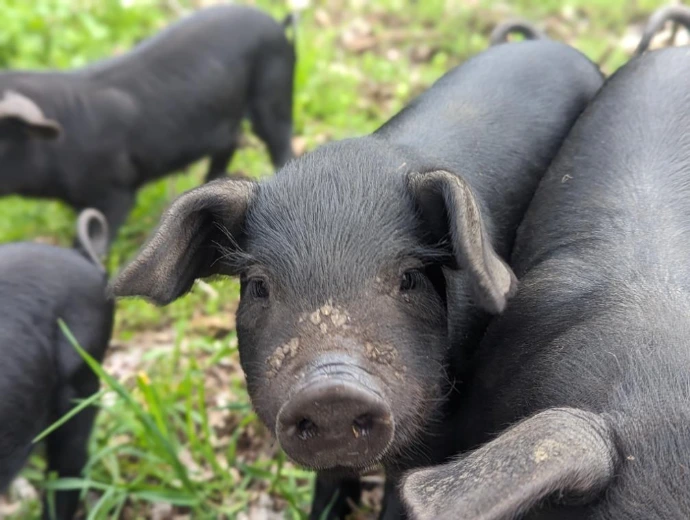
Pastured pigs do what they want
Here at BOTL Farm, we don’t have a boar (breeding male pig) because we don’t want a boar. Boars are big, stinky, and potentially aggressive to humans, especially during breeding time. It’s relatively simple and reliable to artificially inseminate sows (breeding female pigs), so we take that route. Since we’re inseminating the sows, we mark the calendar and know within a day when they’re going to farrow (give pig-birth). We had a sow that was due to farrow two days before the solar eclipse and she seemed to start her labor right on time. However, she hung out for just over two full days in a state of quasi-labor. She didn’t seem upset or struggling, so we gave her plenty of space, food, water, bedding, and let her do her thing. She’s a proven breeder and has never had birthing issues. Once the sky started darkening for the solar eclipse, she finally laid down and got to work. She somehow managed to correlate the few hours that it took to birth 12 piglets to the exact time of the solar eclipse. Although it didn’t get totally dark here (5% of the sun is still a lot of light, it turns out), we got to sport our cool eclipse glasses while watching our sow farrow..
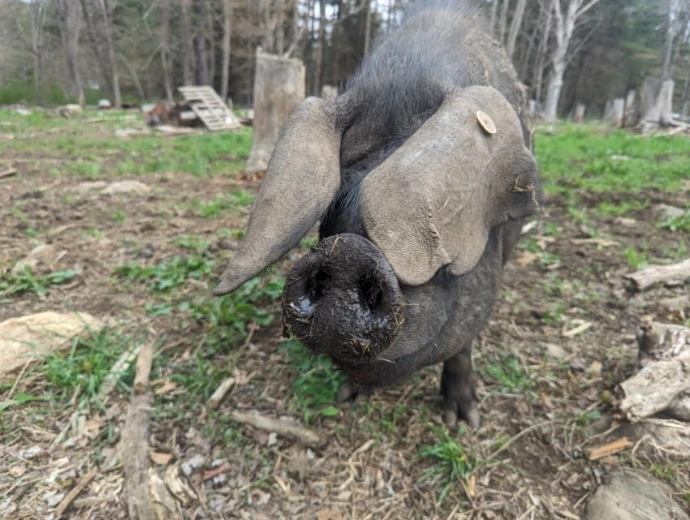
A slaughterhouse door closes… and then it reopens?
Even though we strive to be an independent, low-input farming operation, there are still a few key businesses that we absolutely can’t do without. One is our trusty feed mill who custom-mixes rations for our pigs and chickens. The other big one is our slaughterhouse.
Our certification, Animal Welfare Approved (AWA), is a birth-to-slaughter program. Our farm is audited yearly, plus we can only use a slaughterhouse that is also certified and audited yearly. Since there are very few AWA farms in our region, there are correspondingly very few AWA slaughterhouses. We also learned from our long-ago farm mentor that all farm-slaughterhouse relationships will have some issues but it’s probably best to work and learn together instead of jumping ship at the first issue. Taking this advice to heart, we’ve been using the same slaughterhouse since our very first group of pigs.
This February, we were a little traumatized when we heard that our slaughterhouse (also called a ‘plant’) had encountered some difficulties and was abruptly closing. The plant is a nonprofit and management issues led to financial troubles. During the shutdown, they did a total rehaul and some fundraising. They assured everyone they would reopen and gave a tentative date (assuming the fundraising went well). As fate would have it, we were scheduled to bring pigs in the very first day they were reopening. We knew a lot of farmers were jumping ship and scrambling to get their animals scheduled at other plants, but we sat tight, crossed our fingers, talked to as many people involved as we could, and kept our dates (okay, of course we had a backup plan in case it didn’t work out, but we do love our plans and backups).
We’re happy to report that the slaughterhouse did reopen on time, we brought in our pigs on the first day the plant reopened, and we are proud (we think?) to be their guinea pigs (lol).
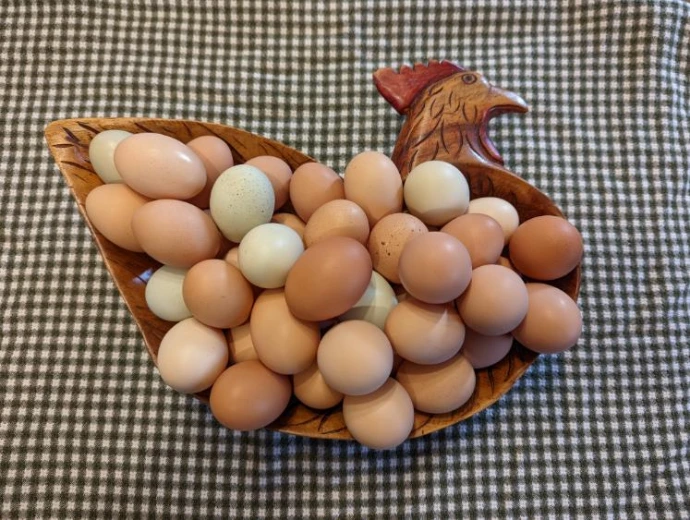
A teenage chicken lays an egg…
We have pullet eggs! ‘Pullet’ is farmer-jargon for ‘teenage egg-laying chicken.’ When we say that we have pullet eggs, it means we have eggs from a young-ish group of hens who recently started laying. When hens start laying for the first time, they’re still figuring out the whole process and sometimes getting unexpected results (like all teenagers). Some of the eggs are quite small with a very tight egg white and a relatively large yolk compared to egg size. Other eggs are bigger than average and contain not one, but two yolks: often called double-yolkers. It’s just kinda bonkers for a while. After a few weeks, the eggs become more regular in size as the chickens ease into mature adulthood.
Most of the pullet eggs are on the smaller size and will get bigger. We try to identify the double-yolkers but probably miss a few now and then. The pullets are also quite vigorous layers, so we have lots and lots of pullet eggs right now. You should try some next time you get eggs!
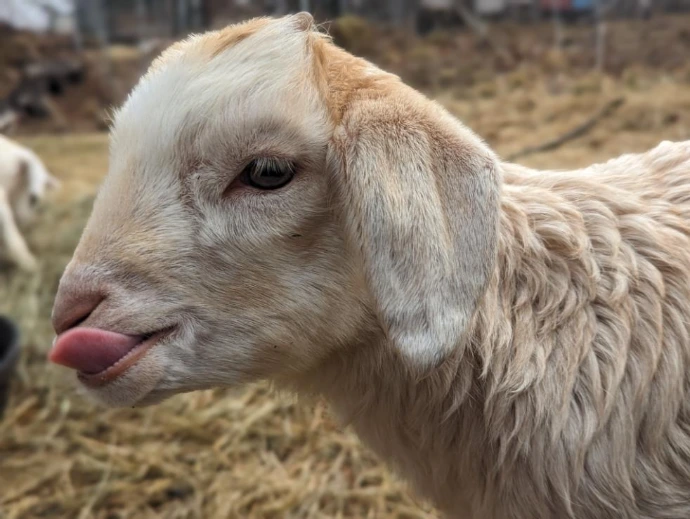
Kelp as a livestock supplement
All of our animals get some kelp as a supplement. Kelp is a farmed seaweed that provides a seemingly countless number of minerals and amino acids that are hard to source from other feed sources or soils. Most of the highest-quality kelp is from Iceland, where the seaweed is dried on volcanic rocks and absorbs even more trace minerals during the process. It’s real wild out in Iceland.
Unfortunately, Iceland has had a bit more volcanic activity lately than is good for their kelp harvest. We got notification from our feed mill that the price of Thorvin kelp has increased substantially due to labor conditions and everyone’s go-to excuse, “supply chain issues.”
Although we recommend making kelp a small part of your livestock’s diet, it’s going to be a bit more spendy now.
Find us this month
On farm store: Tuesdays noon - 2pm, Saturdays 1 - 3pm. Pre-order
On farm self pickup: Everyday 8:30am - 8pm. Pre-order only
Assawaga plant sale: Saturday May 18 from 9am - 2pm. This is a once-a-year and very busy event. It’s the start of Assawaga’s market season. They’ll have plants for sale as well as some fresh veggies. We’ll have lots of meat and eggs! Pre-order
Assawaga farm market: Every Saturday from 9am to noon starting May 25 until the weekend before Thanksgiving. We’re there (mostly) every other week. Dates we’ll be there in May: May 25. Dates we’ll be there in June: June 01, June 15, June 29. Pre-order
It's too many numbers! Save me!
Want to get these blogs in your inbox? Sign up for our newsletter.