Goats
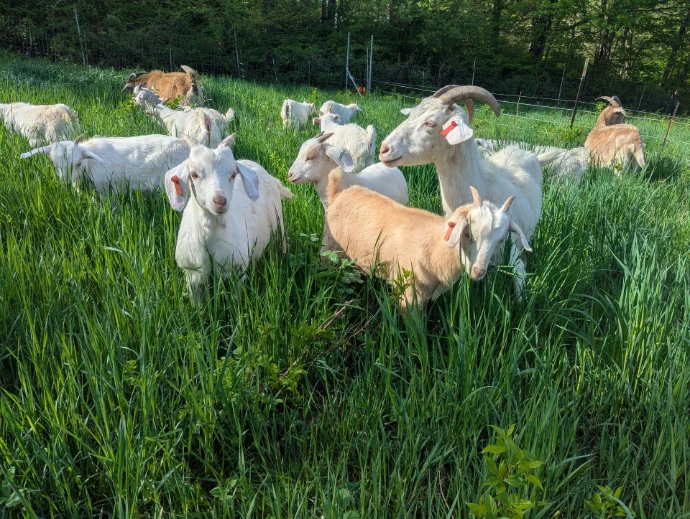
A lot of farmers think that raising goats is a terrible idea, and here at BOTL Farm we were interested to find out exactly why that is. Turns out, goats are the noisiest, nosiest, most curious creatures we have… but they love to eat poison ivy and all the bushy, thorny things that grow in the forest that other grazers avoid. Their dedication to hard forage makes our passive, animal-driven forest clearing possible!
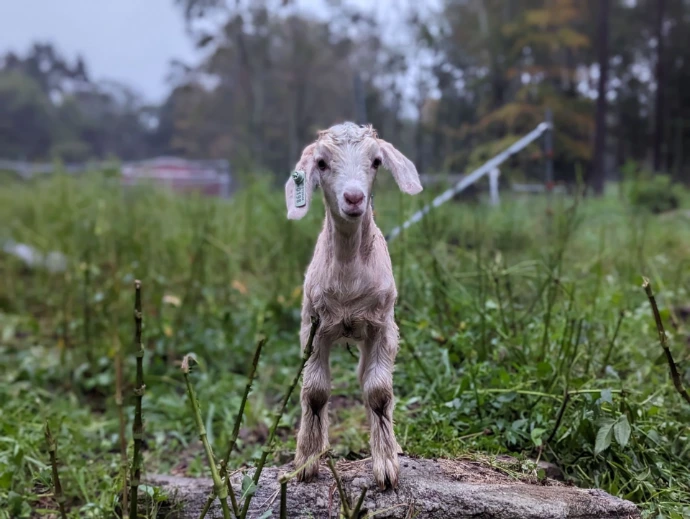
So, against the advice of generations of farmers before us, we’re still making more goats! We have a herd of purebred Kiko goats that we raise for meat. Not sure what it says about us, but we used to raise sheep and goats together but decided to stop with sheep and just focus on goats. Maybe we're noisy and nosy, too?
Eating and preparing goat meat might not be familiar to everyone, yet in many cultures around the world it is a regular part of their diet. At one time, it was considered to be the most commonly eaten meat worldwide. We describe the flavor of our grass fed, pasture-raised goat meat to be somewhere between lamb and beef.

Our goats are raised using intensively managed rotational grazing methods. They move daily (usually twice a day) around the farm to new paddocks. They live outdoors all year long, on pasture and in wooded paddocks, and are never confined or kept indoors. They are Animal Welfare Approved by A Greener World, and also Certified Grass Fed by the same organization, meaning they are grass-fed, grass-finished, and never fed any grain.
Breed - Kiko
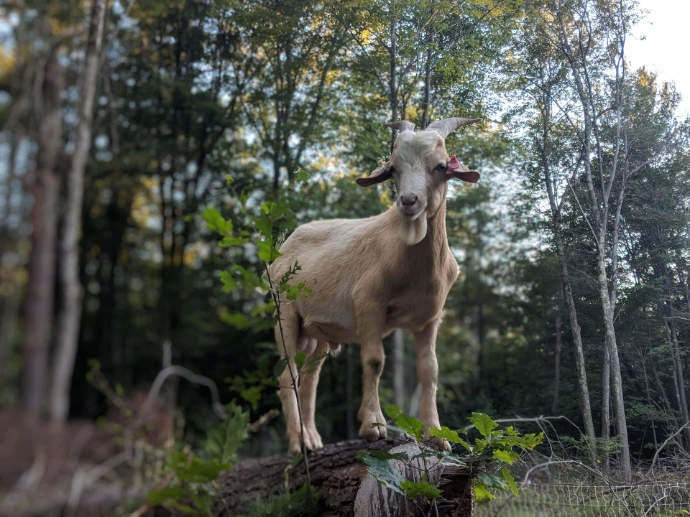
The breed now known as Kiko is originally from New Zealand, and is basically the super-heroes of goats.
Rumors
It’s rumored that the breed originated when an enterprising farmer in the hill country of New Zealand let a bunch of goats go into the wild, came back five years later, rounded up the animals that were left, and started selective breeding from there. As far as we can verify, this is (mostly) a true story.
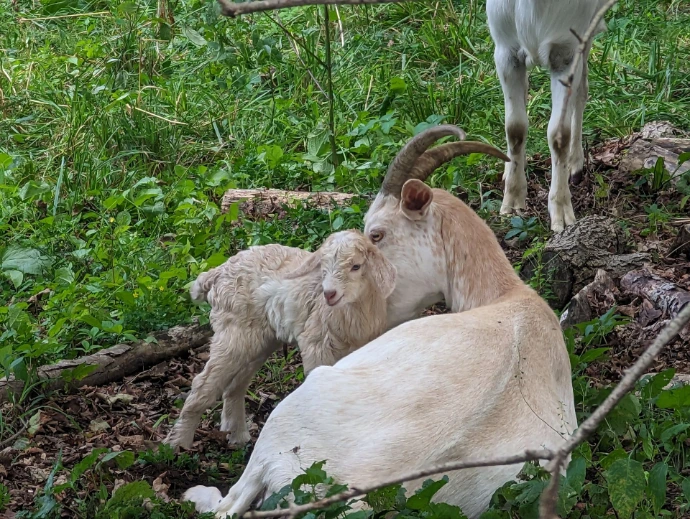
Hardiness
Kikos are famous for hardiness, low susceptibility to worms and disease, ability to birth and successfully raise triplets (even on pasture!), and the males have truly epic horns (up to four feet!).
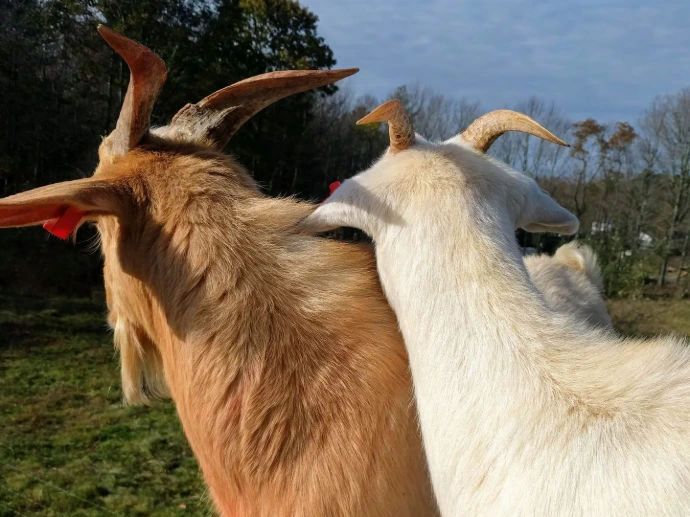
GMGF
Turns out, it’s wildly expensive to get Kikos in the US so we started our herd with just two goats, our future matriarch (named Goaty McGoat Face) and the male we would, for some reason, name ‘Grandma.’
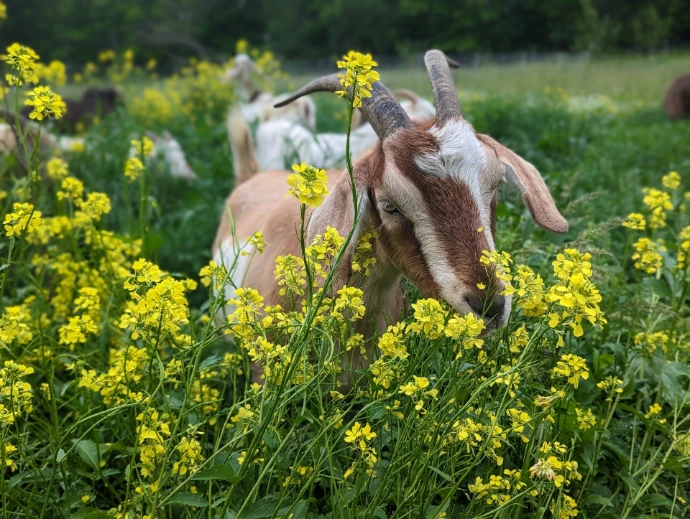
Expansion
We’ve slowly expanded the herd from there, bringing in fresh genetics as necessary to maintain a healthy herd.
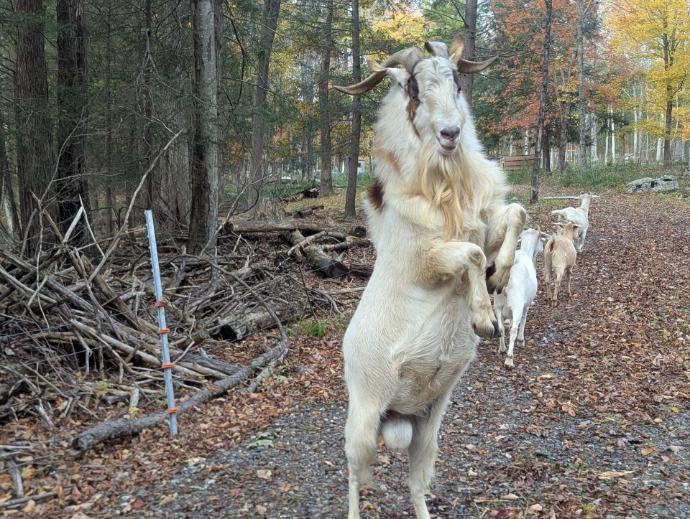
Breeding stock
New breeding stock is chosen based on parasite resistance and growth rates, but mostly parasite resistance.
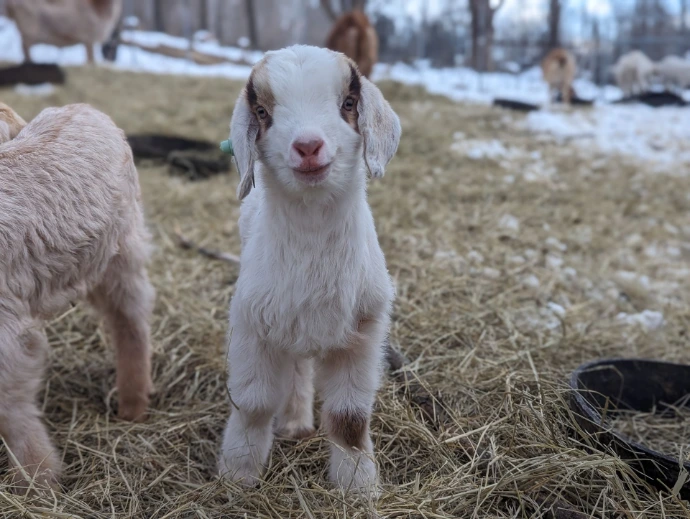
Parasite resistance
Have we mentioned parasite resistance is a challenge for pasture-raised animals?
What the goats eat
Our goats are Certified Grass Fed by A Greener World, which means they are grass-fed and grass-finished, never supplemented with grain. They graze on grasses but also enjoy browsing on tree leaves and taller, shrubby plants during the warmer months.
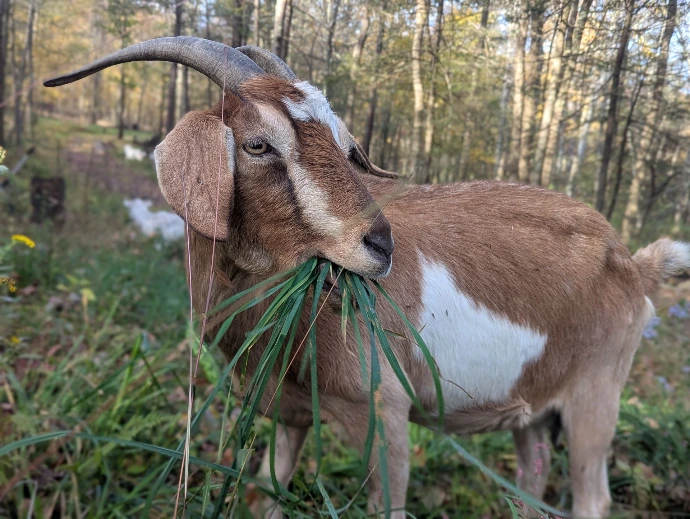
They eat locally sourced hay (which is dried grasses) during the colder months. We also give them Alfahay as a treat. Year-round they have access to a loose mineral mix that satisfies their drive for salt, but also contains minerals, probiotics, and Icelandic kelp (which is basically an all-natural, ocean-smelling multivitamin for livestock).
What we make
We typically harvest goats in the fall but occasionally we overwinter some goat kids and will have meat available in the spring.
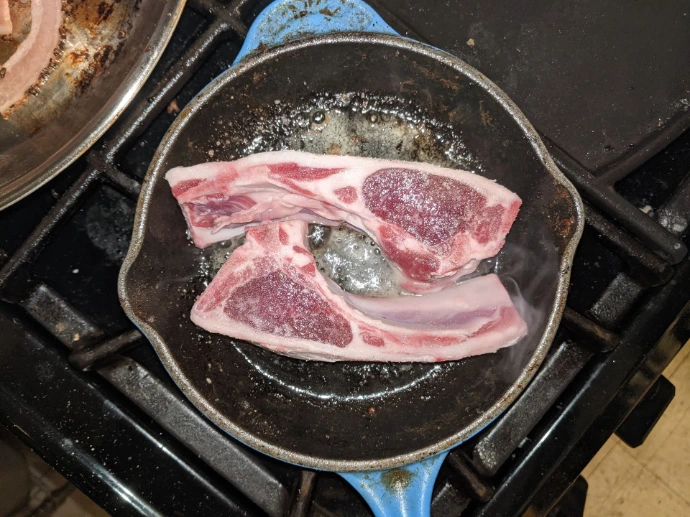
Cuts
We offer bone-in stew meat, a few types of chops, ground, shanks, and sometimes leg roasts.
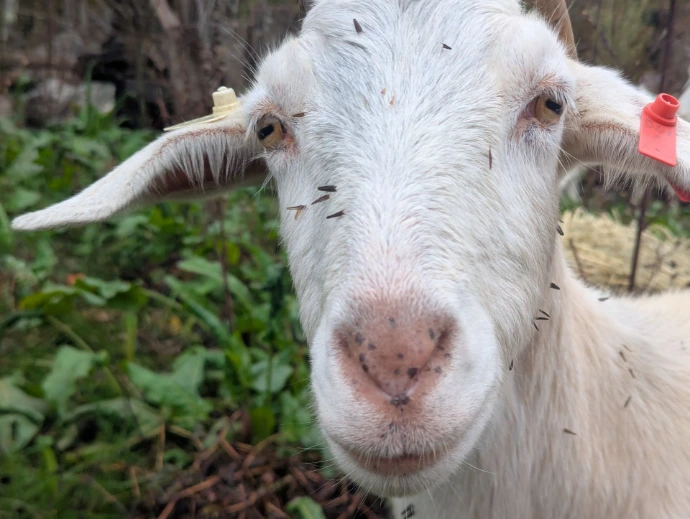
Nose-to-tail
Liver, heart, kidney, bones, head, fat as well as the really unique farmer-made items like goat testicle jerky.
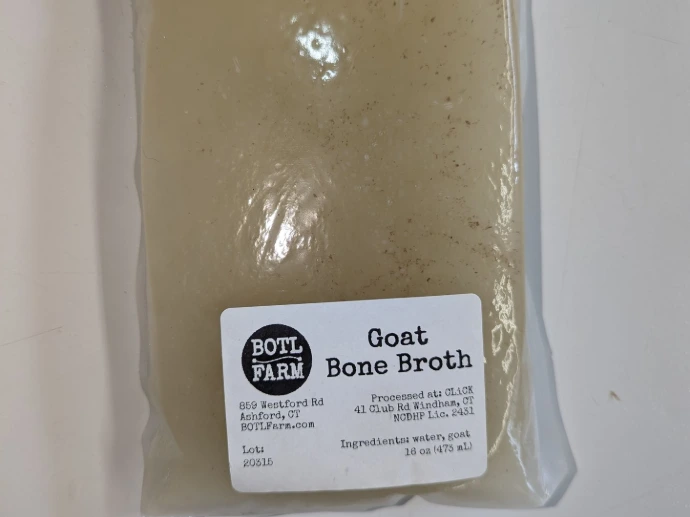
Bone broth
We often debate the difference between stock, broth, and bone broth but haven’t found a satisfactory answer. What we know is that we take bones and heads from our animals, add water, and vigorously boil for hours. The resulting thing we normally call bone broth for simplicity, but it is worlds away from the stuff in a can in grocery stores.
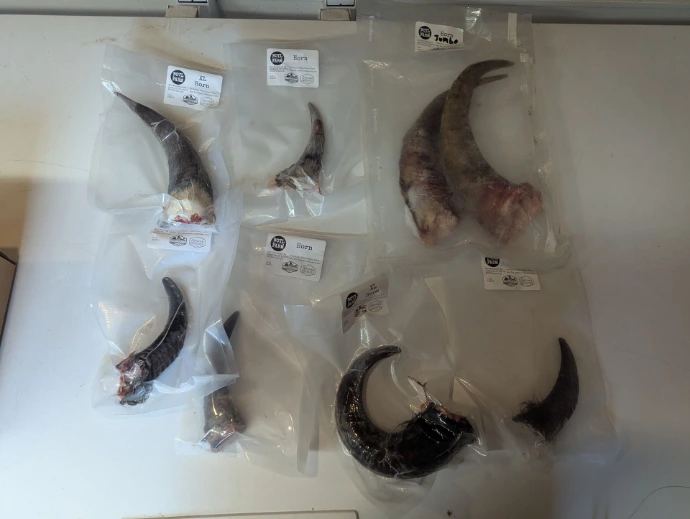
Pet treats
We use the whole animal, even the parts that maybe aren't very edible to humans. Luckily we have four-legged pets to help us out with horns, hoofs, tails, and testicles.
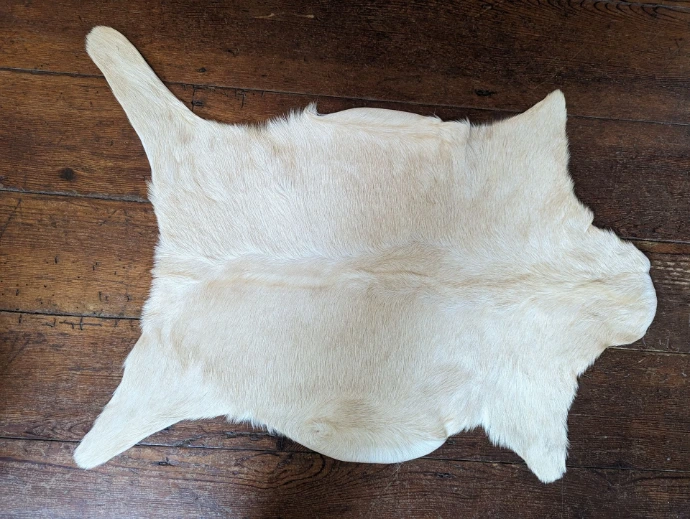
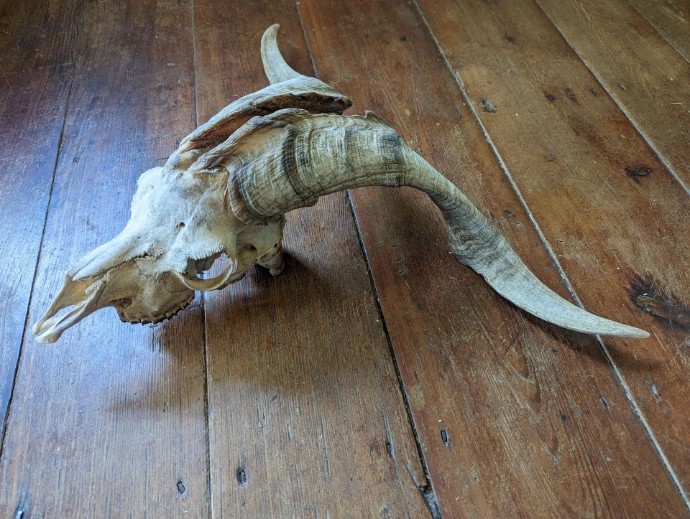
Skulls
We keep and process some goat skulls for decoration, folks who collect skulls, and artists who use skulls. These sometimes have epically big horns.
Buying options
A la carte
We sell everything by the individual package.
What we don't sell
Whole and half goats
Want a whole or half goat? Because of limitations imposed at the slaughterhouse we use, we can’t offer whole or half goats for purchase. For info on the closest we can get to bulk goat, check out our Meat CSA page.
Live goats
We don’t sell them. Due to our farm’s welfare standards, we don’t sell live animals for any reason, unless you’re a farm with current Animal Welfare Approved certification for the species in question.
Goats for religious slaughter or ritual slaughter
We don’t sell goats for on-farm slaughter, religious slaughter, or ritual slaughter.
Dairy/milk/cheese products
All the milk our goats produce goes towards feeding their kids. We don’t milk the goats so we don’t make any dairy products.
Nutritional benefits of pasture-raised goat
This is a fact sheet from FACT (Food Animal Concerns Trust) and highlights some of the nutritional benefits of pasture-raised goats compared to conventionally-raised (aka in a barn or building or concrete slab or dirt lot) goats. We love a good FACT fact sheet!
Page Last Updated on 2026-07-19