Things we used to make
Here at BOTL Farm, we have had many ideas over the years. From starting off raising rabbits, the few years we did sheep, finding uses for eggs that don't sell, to adventures in pasta making, and rough sawn lumber. This page will briefly go though some of the more notable items.
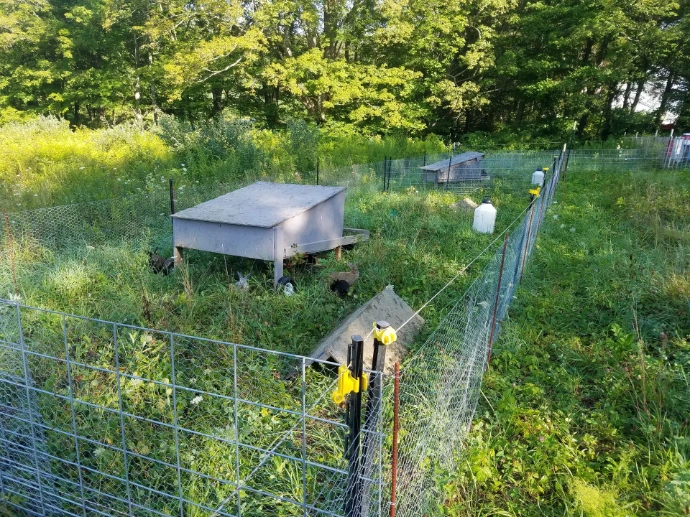

Rabbits
Sheep/lamb
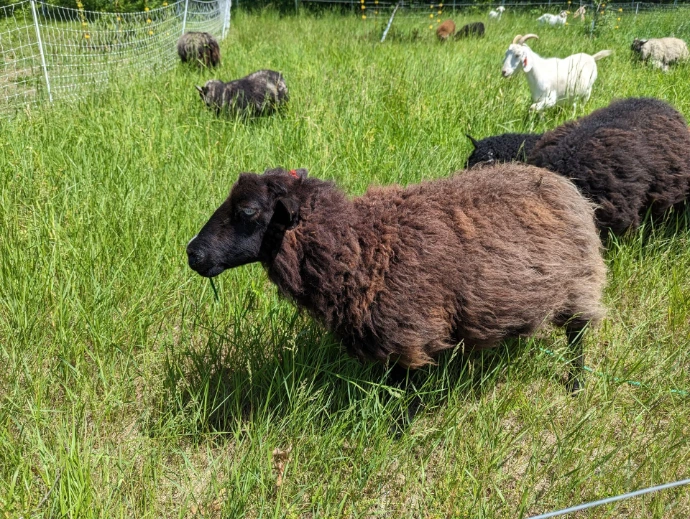
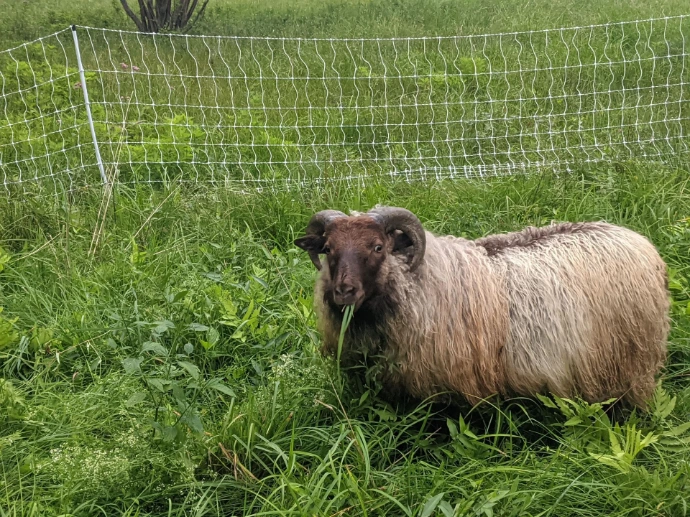
Here at BOTL Farm, we never intended to raise sheep. We wrote a 35-page business plan back when we were in the beginning stages of putting together our thoughts and money to buy a farm, and it had zero mentions of sheep. Luckily, the universe knew better and shortly after we’d established our farm, we got a call from our previous farming mentor to let us know that she was getting out of farming and she was going to deliver us three of her ewes (farmer jargon for breeding-female-sheep) and their six collective lambs.
So, for a few years we raised sheep and they were a marvelous addition to our farm. Our sheep were raised using intensively managed rotational grazing methods. They moved around the farm paddocks with their buddy goats, who they lived with for most of the year. They lived outdoors all year long, on pasture and in wooded paddocks, and were never confined or kept indoors. They were Animal Welfare Approved by A Greener World and also Certified Grass Fed by the same organization, meaning they were grass-fed, grass-finished, and never fed any grain.
Although we had a nice time raising our flock of mostly pure-bred Icelandic sheep, we made the decision in 2024 to stop raising sheep and focus on goats.
Biscuits
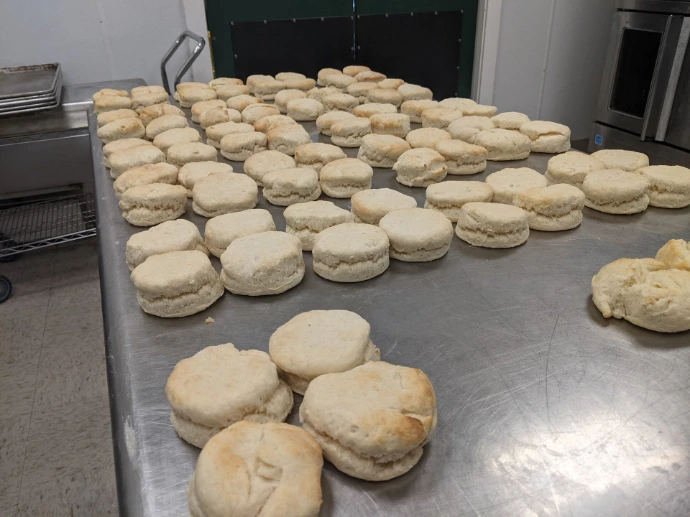
Back when men were men and women were property, women were expected to make lardy biscuits three times a day so they would be fresh-baked and warm for each meal. Fast forward to now, we’re happy to report that we used to make large batches of biscuits for sale and we also froze biscuits, so they were just a thaw away from being ready to eat at your next meal. We used lard from our own pigs, along with locally grown and locally milled wheat flour from Ground Up Grain in Holyoke, Massachusetts.
We no longer make biscuits for sale, but we have a delightfully reliable recipe if you want to make your own. Recipe coming soon.

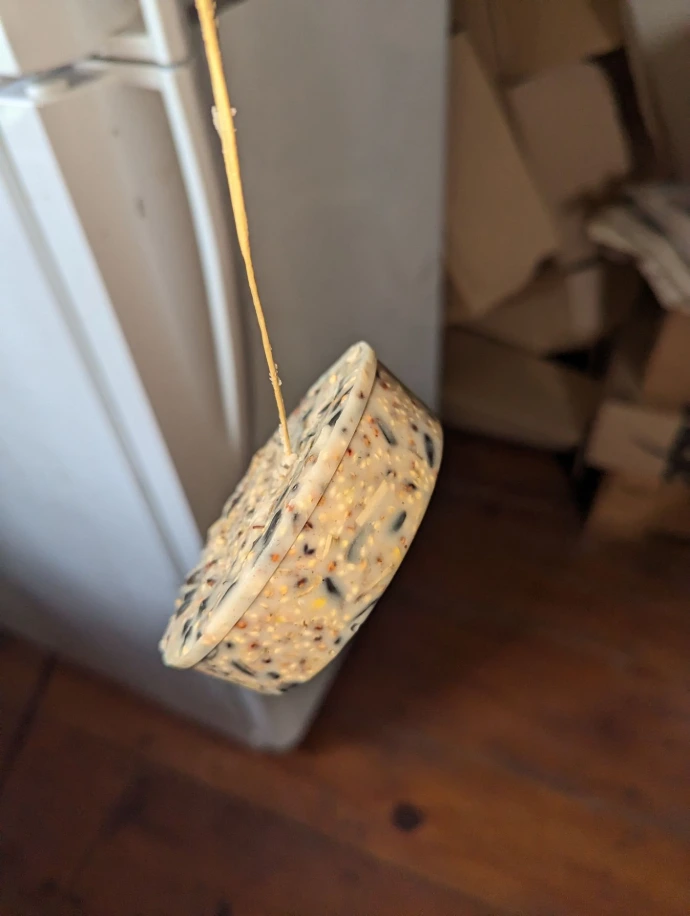
Birdseed cakes with lard
Birdseed cakes made from suet may be more familiar to many, and that’s a result of a few things. We suspect it’s partly because in the US people raise lots of cows in horrible feedlots and feed them inappropriate feedstuff like corn and soy. The cows have lots of fat around their kidneys which is known as suet. Suet is not generally used for human consumption, so a way to get people to buy it is to mix it with birdseed to make bird feed. Also, suet has an unusually high melting point temperature for a solid fat, which means that the suet birdseed cakes will stay mostly solid in most temperatures.Since we don’t raise cows, we decided to make birdseed cakes with lard from our pigs. The cakes were delightful, but lard has a much lower melting point than suet, so our lard birdseed cakes were only good in cooler months.
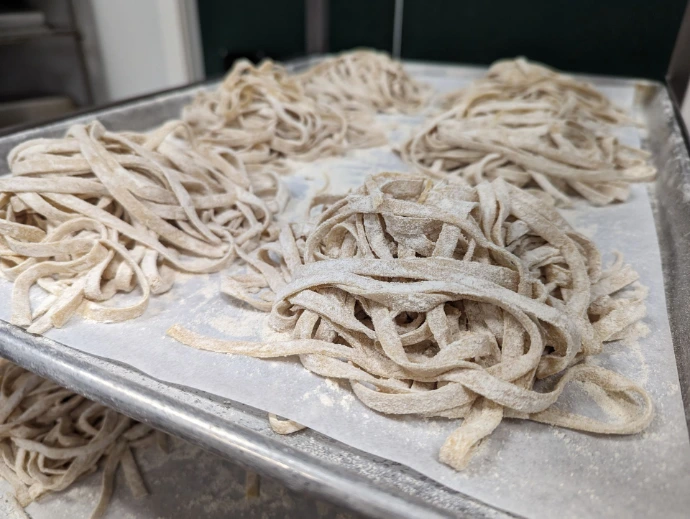
Egg pasta
The egg pasta we used to make had only three ingredients: our own eggs, local wheat flour, and semolina from far away places (we couldn't find a local source for semolina). We made each batch of pasta by hand and used hand-operated pasta rollers to form the pasta. We’re simple dogs so we only made one pasta type, linguine. The fresh-made pasta was mixed up with some extra flour so it won’t stick to itself while it’s cooking, put into packages, and frozen. It could go straight from the freezer into a boiling pot of water and would be done in a few minutes! Recipe coming soon.
Frozen eggs
It's hard to imagine as of now, but we used to make more eggs than we could reasonably sell. We weren't always so fortunate so we used to freeze eggs. We would crack open eggs, mix them up, package them, and freeze the packages. There were no stabilizers, preservatives, or salt, so the bags appear quite orange when frozen but would turn a more normal yellow color as they thawed. They also sometimes separated a little as they thawed, but mixing the whole thing up and using it for scrambled eggs, quiche, baking, casseroles, and anywhere else that calls for beaten eggs was great. Ah, the good old days.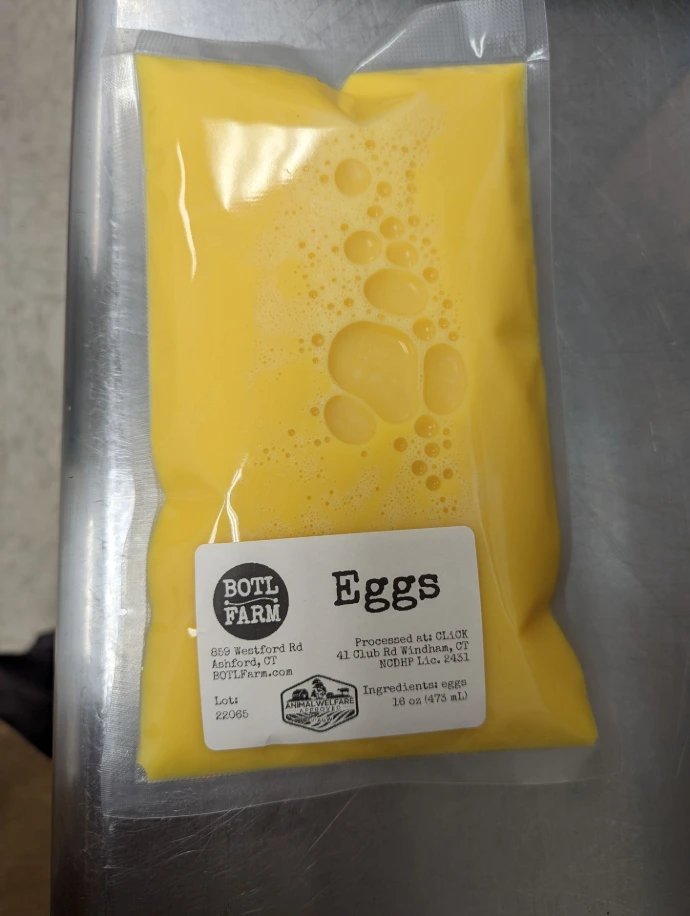
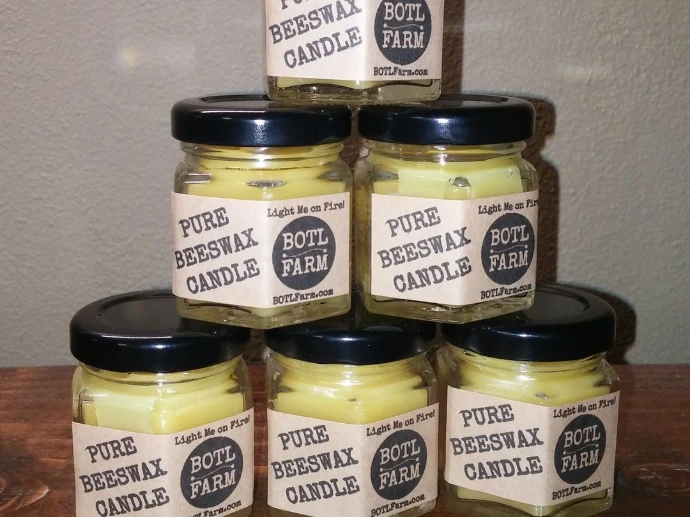
Beeswax candles
The beeswax used for these candles was a byproduct of our honey. There were no additives in these candles – just our wax and the wicks. The wicks were 100% cotton with a metal safety tab.
We made these for the first time in 2015 and we expected them to sell out quickly, but they didn’t. Actually, nobody but my mom bought any for the first few years. Thanks, Mom!
Update as of 2023: we’ve made several batches of beeswax candles and people besides my mom have bought and enjoyed them!
Update as of 2024: we no longer produce enough beeswax that we want to make candles. Try lip balm instead!
Berry jam
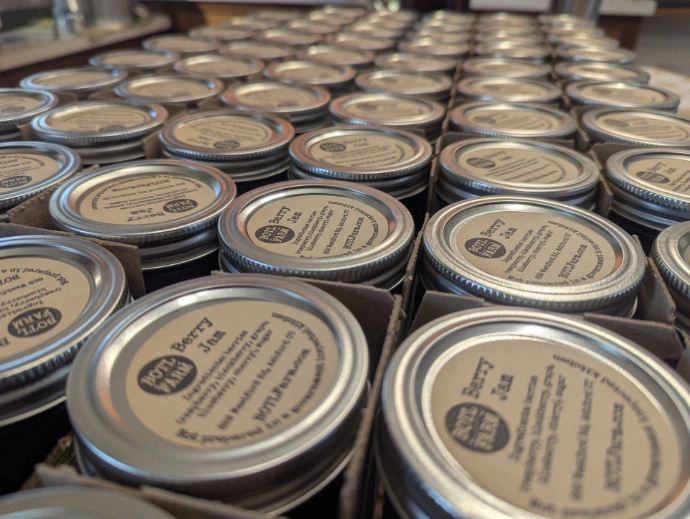
Once upon a time, we thought we would grow plants. Turns out, growing plants is not one of our core strengths. We now leave it to the pros. However, we had very few exceptions. When we bought our house, we planted an edible hedge on the property line of perennial berries (are those the ones that comes back every year? We told you we aren’t great with plants). This was an awesome decision and we high-five our previous selves for doing it. Every year we have an abundance of berries, of which we eat as many as we can and freeze the rest. Then, after berry season, we make an awesome multi-berry jam. The mix of berries changes a bit every year, but was usually predominantly raspberry and blackberry, with some cherry, blueberry, and strawberry.We found it fun to leave the berry mix full-seeded, so we didn’t strain out any of the seeds (okay, we did remove the cherry pits, that’s real weird to leave them in) so we were left with a sweet, crunchy, great-on-biscuits jam!
Update as of 2025: we meant to make jam, but it didn't work out. Some years we're so focused on other things that we let the daily berry picking slip. Oops!
Lumber and wood products
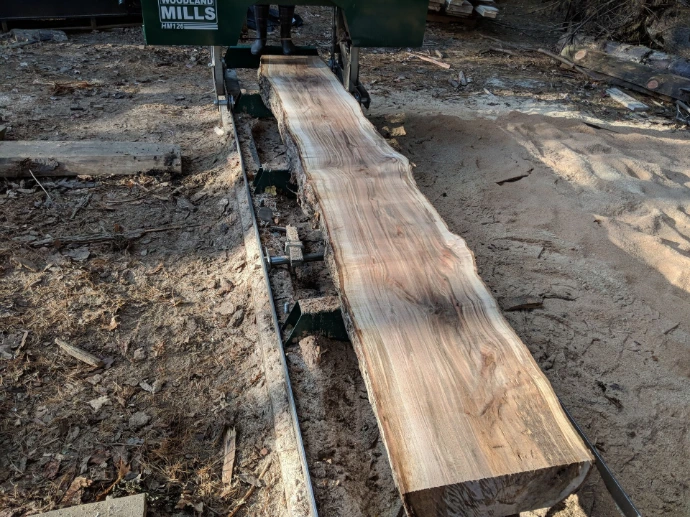
Back when we bought the property that our farm is now on, our brother/brother-in-law (Eric) visited. After taking a look around, he declared that we appeared to have purchased 40 acres of trees and poison ivy. We didn’t listen to him because he knows nothing about the fun sense of impossibility that surrounds farming, but when he told us we should get a sawmill, we did listen. But, we told him he had to be the primary sawmill operator because he’s a fairly-serious woodworker.
We used to sell rough sawn lumber and slabs, but now that the farm has been somewhat civilized and there are less big trees, we use most of the lumber we make for farm projects and are no longer selling lumber.
Fruits, nuts and veggies
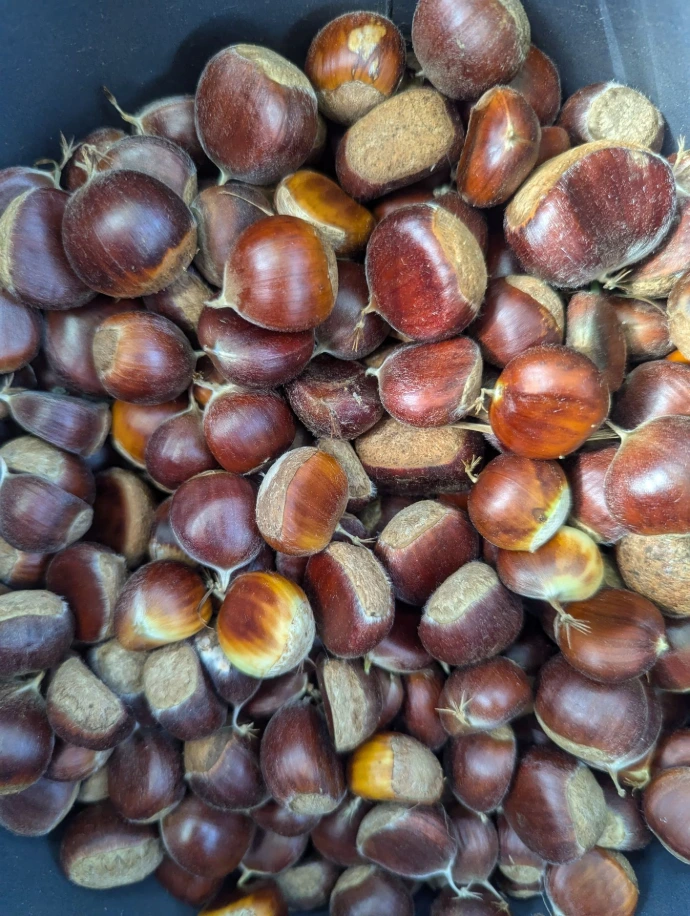
Although we only have the vaguest notions of how to grow plants, we do sometimes produce large quantities of nuts (chestnuts), fruits (raspberries, strawberries, apples), and vegetables (walking onions, asparagus). We grow these on our farm for our personal or animal use, but occasionally will have excess that we’ll offer for sale.Update as of 2026: lol, it's been years since we've offered any of this for sale.
Honey
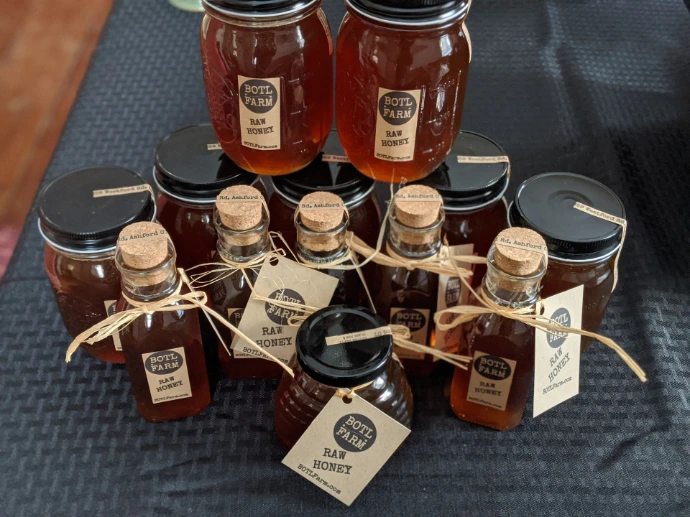
Although we still keep bees [as of 2026], our middling ability at beekeeping has caught up with us and we haven't had enough honey to sell for many years. When we used to produce it for sale, our honey was as natural as can be and was a mix of the entire season’s harvest (often called “wildflower honey”).
Page Last Updated on 2026-03-15