
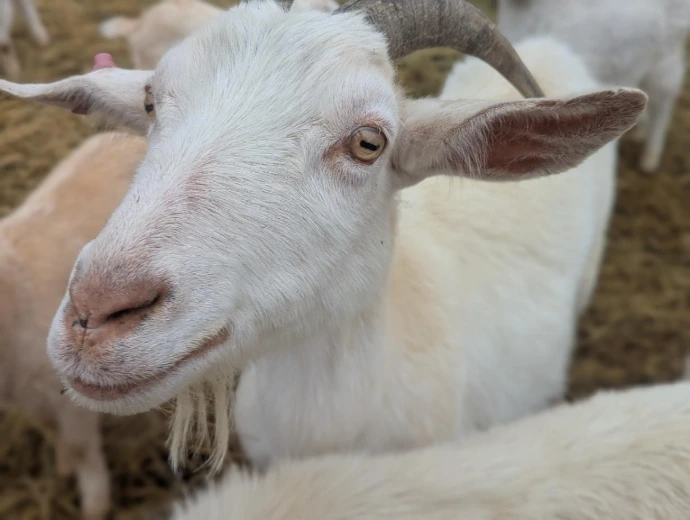
Wool pellets: our latest nose-to-tail idea
Here at BOTL Farm, we have a delightfully strong commitment to using all the bits of the animals we raise, even the weird bits (who remembers testicle jerky?). When we (badly) shear our Icelandic sheep twice a year, we have wool that most farmers would say is waste (did we mention we’re pretty bad at shearing sheep?). Since we’re stubborn about these things, we saved many years worth of ‘waste’ wool until we found a use for it. Lo and behold, we heard that someone in eastern New York was going to open a wool pelleting business and we were excited that we were literally their first customer! We’re still excited.
Our wool pellets are 100% Icelandic wool and are intended for gardening use. Wool pellets provide moisture retention, soil aeration, and are a great source of macro and micro nutrients. They break down in six months to a year. They’re probably the only Animal Welfare Approved and Certified Grass Fed by A Greener World wool pellets, like, ever? We offer them in home-garden-appropriate size bags, just in time for planting season! Look for them at the Assawaga Farm plant sale this month.
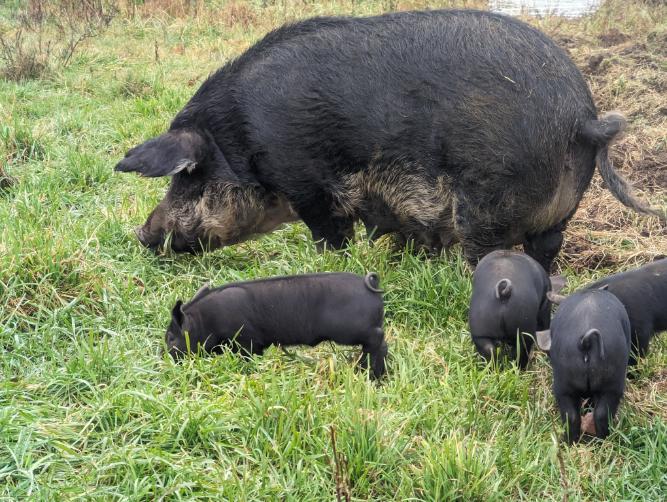
Who’s a big pig?
When we were baby farmers learning at the feet of our excellent farming mentor, we would show up at her farm and she’d ask us if the pigs looked bigger than the last time we saw them. We thought this was pretty weird since she sees them every day, but it turns out that she was onto something: when you see a group of pigs every day, it’s actually quite difficult to reliably detect changes in size. The longer she (and us) farm, the worse we get at estimating pig sizes by sight alone.
In her infinite wisdom, she taught us a valuable tip/trick: when you need to know how much a live pig weighs, get a flexible measuring tape and approach the pig. Measure from right behind the ears, down the back, to the beginning of the tail (in inches). Multiply that number by the square of the ‘girth’ of the pig, by putting the measuring tape between its shoulder blades, sneak it under its belly, and snug it up to its armpits. Now the magic happens: divide the resulting number by 400 and you get the weight of the pig (in pounds)! This sort of assumes pigs are cylinders (okay, maybe not really), but the method is very accurate. We recently ‘taped’ a sow right before slaughter at 522 lbs and she weighed 522 lbs at the slaughterhouse. Magic! Or, lucky.
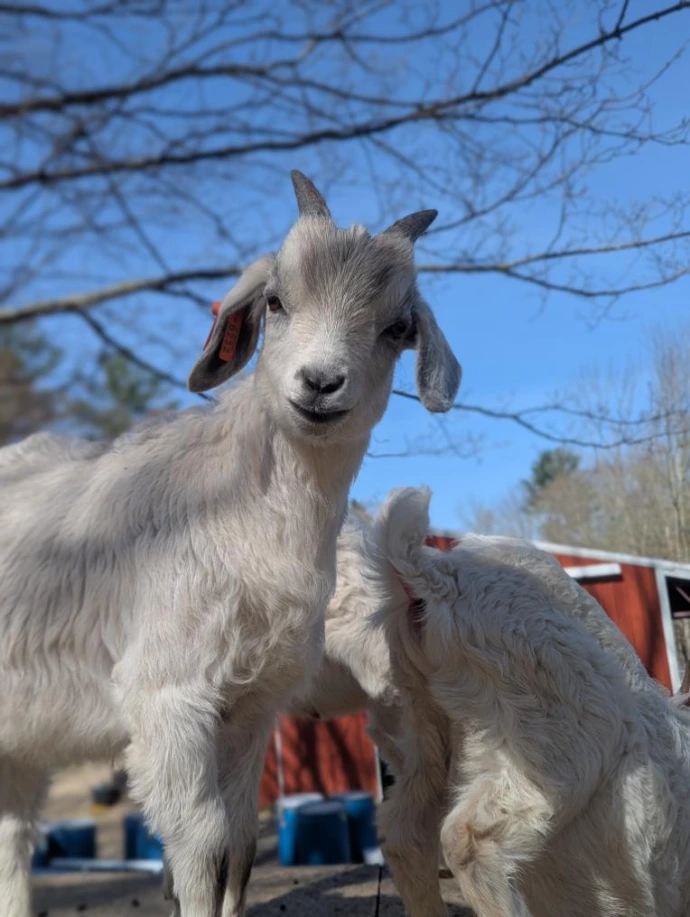
Definitely-not-boring website updates
Now that we’re transitioning to warmer weather and grazing season, we focus on moving animals, looking at grass, fixing infrastructure, spending time outdoors, and (did we mention) looking at grass. This differs from what we focus on during the winter months, which is (definitely not boring) things like changing accounting software, systems building, and updating our website.
Each winter we spend many fine hours at our favorite breweries, actually reading every page of our website as well as each glossary term and FAQ, either laughing, crying, or reminiscing about the stories from previous years. We update everything and make corrections so that the site stays fresh and accurate. We recently finished our annual update and are looking forward to doing it again next year.
You may have not ventured into our many-tentacled monster of a website, but you should. We’re totes not biased, but we wrote the whole thing, and we’re sure it’s not boring. There are photos, details about our raising practices, blog posts from when we first began, jokes that only my mom gets, and lots of details about how we farm. If you’re a fan of all things BOTL Farm and looking to learn more, consider looking at the tentacle monster!
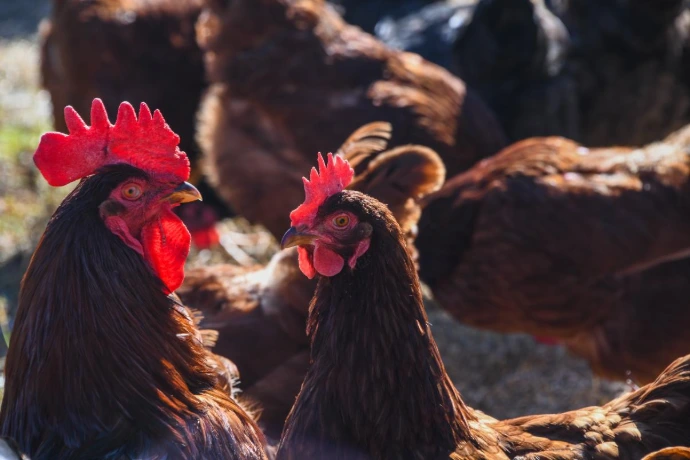
It’s chick season for normal people
Unlike normal people, we think it’s a good idea to get chicks in the coldest depths of winter so they start laying in April or May (it worked, we got our first eggs this week). Normal people get chicks in April or May when the weather is warmer and they don’t have to spend zillions of dollars keeping their chick brooder warm when it’s -5 F. Anyways, around this time of year we get lots of questions about chicken feeds so here is some useful info.
Spoiler alert: there are three feed and grit types based on age (starter, grower, layer) and lots of different varieties of feed.
Chicks need starter feed until they’re about four weeks old. At that point, chicks should be switched to grower/broiler feed until they’re 16 - 18 weeks old or about to start laying eggs, when they switch again to layer feed. Meat birds will finish on grower/broiler feed.
We recommend offering a free choice insoluble granite grit (which, of course, we offer at our store). Like feed types, there are three sizes of grit: starter, grower, and layer. Grit follows the same schedule as feed, easy-peasy.
To make this even more complicated/awesome, we offer several variations of layer feed. All of them are soy-free and certified organic (everything from NCO is soy-free and certified organic), but there is a classic layer (with corn), a corn-free layer (guess what, it’s corn-free), an olive oil layer (no seed oils), and a wheat-free layer (guess what it doesn’t have!). Head to our website to see what we routinely stock and what’s special-order. Or just start with corn-free and decide which works best for your feathered friends.
Find us this month
On farm store: Tuesdays noon - 2pm, Saturdays 1 - 3pm. Pre-order
On farm self pickup: Everyday 8:30am - 8pm. Pre-order only
Wooster Square, New Haven CT: Every Saturday from 9am - 1pm until the end of November. Dates we’ll be there in May: May 03, May 10, and May 24.
Assawaga Farm Market: Every Saturday 9am - noon from May 17 until the Saturday before Thanksgiving. Dates we’ll be there in May: May 17 (plant sale, different hours 9am - 2pm), May 31.
Sturbridge Farmers Market: Starts Sunday June 01! We’ll be there. 9am - 1pm.
It's too many numbers! Save me!
Want to get these blogs in your inbox? Sign up for our newsletter.