
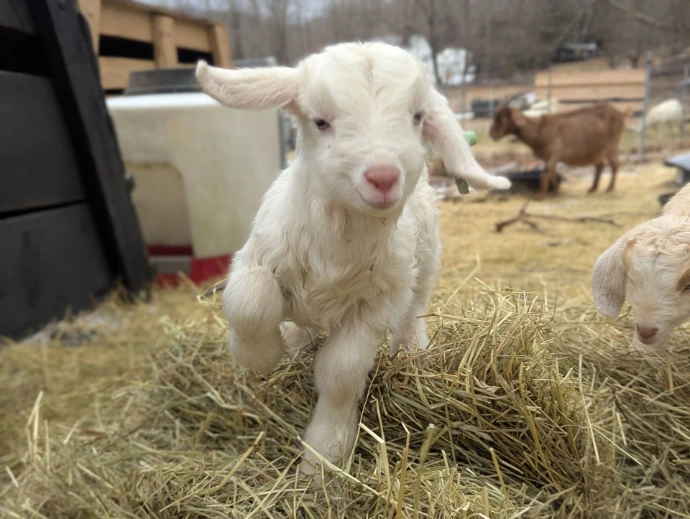
Babieeees
Here at BOTL Farm, we raise goats for the cute pics. Oops, we mean for meat. Mostly for meat. Anyways, our enterprising herd of goats has started kidding (farmer jargon, not for telling jokes, but for giving goat-birth to kids [farmer jargon for goat-babies]). They started kidding in January. Not some reasonable springtime month like March or April, but January. Part of our farm’s mission/vision statement (let us know if you’re ever bored and we’ll send it to you) is that our animals breed according to their natural cycles. We keep the breeding male with the group year-round, which means he’s available to ‘get to work’ whenever the females are in heat. Over the years, they have gradually been starting heat earlier in the fall, which means they kid earlier in the spring (now winter).
Luckily we raise the superhero breed of goats, called Kikos, who are hardy enough to birth, nurse, and maintain kids in the cold months. Plus, did we mention how cute their ears are?
The delights of raising pigs year-round
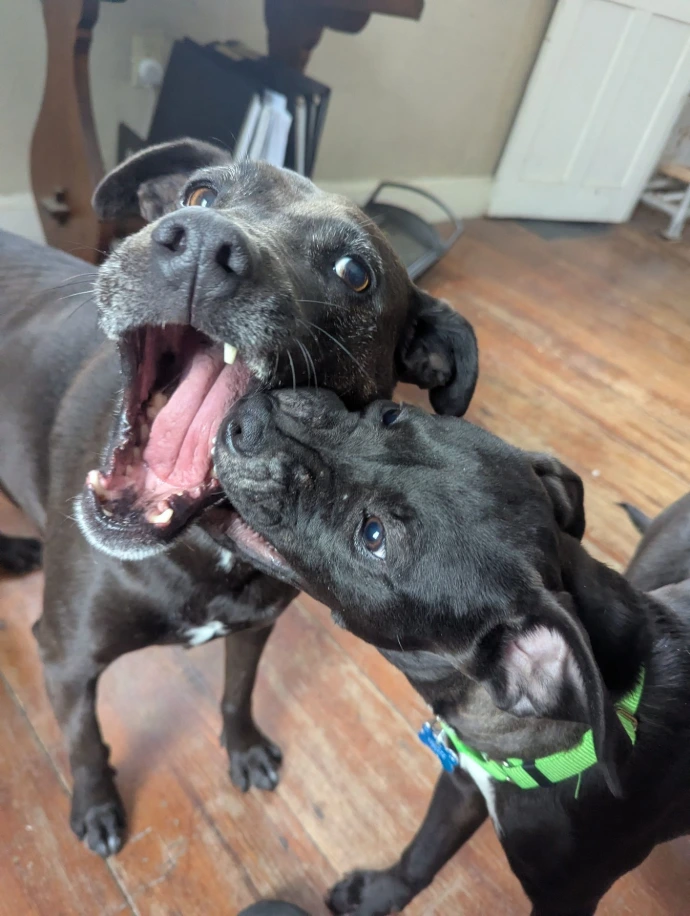
This is the time of year where we normally get jealous of our vegetable farmer friends who take time off during the winter. Luckily this month, we’ve been too busy to be jealous: we had pigs give birth to new piglets, we’re inseminating new gilts (farmer jargon for female pigs who are intended to breed but have not yet), and we took a batch of full-grown pigs to butcher. Not to mention we have a new puppy and we have the rest of the farm. Ooof!
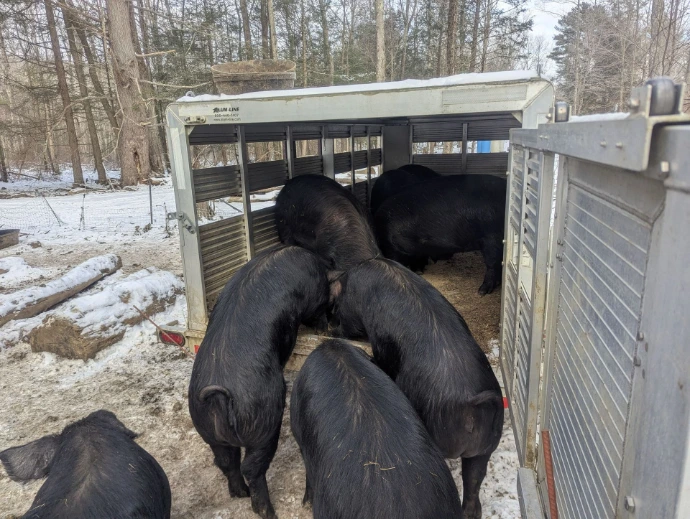
Part of our process for taking full-grown pigs to butcher is acclimating them to the livestock transport trailer we use. Since the piglets are born and live on pasture on our farm for their whole lives, they’ve never seen things like cement, asphalt, or any sort of enclosed building. Thus, when we’re preparing to take them in, we start what we call ‘trailer training.’ This involves backing the livestock transport trailer into their pasture about two weeks before their butcher date, securing the trailer (pigs are big, big biters/pushers), and opening it up so they can explore, practice jumping in and out, and generally get comfortable with the trailer. Then on the day they go to butcher, they’re used to loading and used to the trailer, so it’s no stress (on farmers or animals!) to get them on board and ready for their one-and-only trip off the farm.
Some groups of pigs take to trailer training better than others: our most recent group of pigs was brave, curious, and BIG. They didn’t hesitate at all to get on the trailer and start sniffing out their next adventure.
The winter that was
Lots of people are complaining about the cold weather, but not us. Our farm runs better during winter if the ground is frozen, so we’ve enjoyed the consistently and unusually cold temps we’ve had for the past several weeks. Without being too technical (read: boring), when the ground is frozen, our animals don’t churn up mud, don’t compact the topsoil, and don’t damage plant roots. It’s beautiful how they float on top of the frozen ground, depositing their nutritious manure in their winter paddock without tearing up the ground underneath. We often float on imaginary clouds imagining it. Then we crash down, get some more wood for the woodstove, and try to warm up. Here’s to continued, consistently cold weather to come!
What’s up with egg shortages?
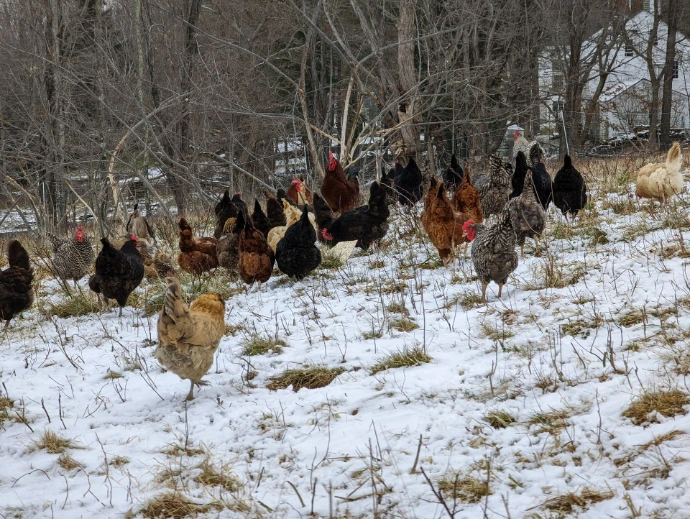
HPAI (highly pathogenic avian influenza) is scary and has had giant impacts on everything from egg supply, chicken meat, pet food, milk, and other stuff (like people). We’ve had it on our radar since we started farming and have had biosecurity measures in place to help prevent infections on our farm. In between bouts of anxiety, we’ve also noted that the majority of HPAI cases happen in industrial flocks who live indoors. HPAI, as a virus, is actually quite susceptible to UV degradation, also known as sunlight. Since our flock lives outdoors on pasture year-round, we have the cleansing advantage of sunshine on our side.
Another compounding factor of why eggs are in short supply is because it’s winter. Chicken lay less eggs in the winter due to the shorter amount of daylight. We should note this only affects flocks who know what time of year it is (aka industrial flocks who are kept in temp-controlled/light-controlled buildings with no windows for their whole lives don’t know when the days are shorter).
Our chickens typically lay through winter because they’re young, strong, and eat super-premium feed. This year, we’ve had a bit of a hiccup because we upgraded their egg-laying box infrastructure. They now have shiny new nest boxes, but between the new-ness and the extreme cold, they have slowed down laying. But we still have eggs!

Find us this month
Note: our online store will be shut down for maintenance from Saturday February 08 in the afternoon until Monday February 10 in the morning.
On farm store: Tuesdays noon - 2pm, Saturdays 1 - 3pm. Pre-order
On farm self pickup: Everyday 8:30am - 8pm. Pre-order only
Sturbridge Coffee Drop: Saturday February 08, 11am - 1:30pm. Pre-order only
Sturbridge MA area home delivery: Saturday February 08. Delivery area is Sturbridge, Southbridge, Charlton, Brimfield, Brookfield MA and other small towns in that area. Pre-order only
“Around Ashford” CT area home delivery: Thursday February 13. Delivery area is Ashford, Willington, Tolland, Eastford CT. Pre-order only
“East of us” CT area home delivery: Thursday February 13. Delivery area is Woodstock, Pomfret, Putnam, Killingly, Dayville, Brooklyn CT. Pre-order only
Middletown CT area home delivery: Sunday February 16. Delivery area is Middletown, Portland, Cromwell, Berlin CT and other small towns in that area. Pre-order only
Hartford CT area home delivery: Sunday February 16. Delivery area is Hartford, East Hartford, West Hartford, Manchester CT. You know the deal, let us know where you are and we’ll see if we can make it work. Pre-order only
It's too many numbers! Save me!
Want to get these blogs in your inbox? Sign up for our newsletter.