
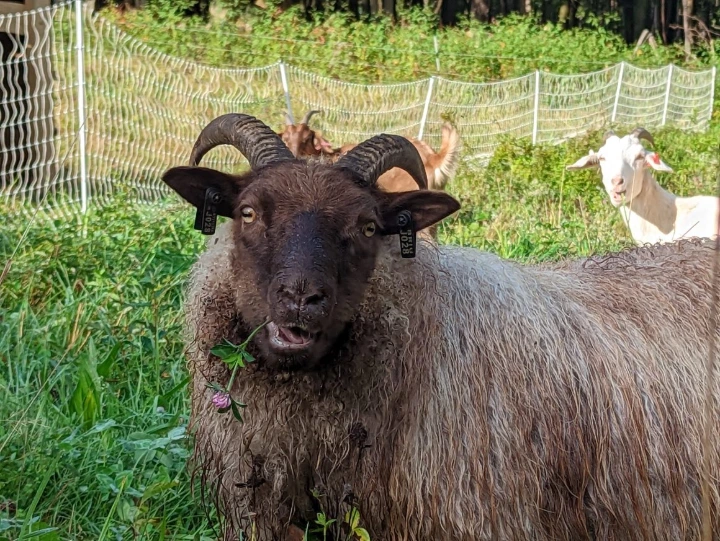
We’re famous — local newspaper article
We get approached with interview requests often enough that we’ve made our own custom interview-request intake form. We use this form to help us track and evaluate the requests. Okay, not all of the requests are for interviews, some are to participate in research programs or help teach classes. Anyways, we recently had a nice on-farm interview with a local journalist who’s been writing about farms for more than a decade.
So we’re proud to be the cover article of the October issue of Neighbors Paper! Pick up a paper copy at the normal places in northeast Connecticut or read all about it here.
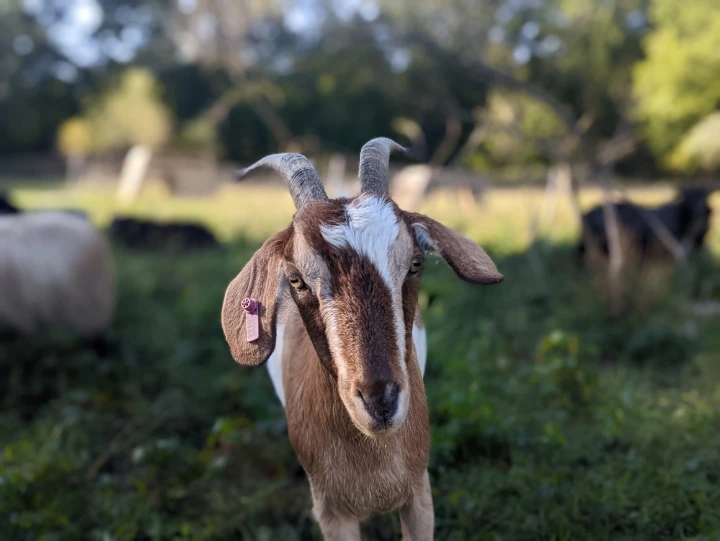
Farming means planning
As you’ll read about in an upcoming blog post (see next month’s newsletter), here at BOTL Farm we don’t like to tie our shoes without a backup plan. We certainly don’t head into the uncertain waters of regenerative livestock farming without a plan, a backup plan, and an emergency plan.
That means every year (at least) we get to go through our plans and update them to reflect what’s happened recently, what’s changing, and new goals. This may not, strictly speaking, be our idea of a good time but it lends some semblance of control to this crazy process.
One of the major planning documents we update every year is our animal health and management plan. This is also a part of our Animal Welfare Approved (AWA) certification and it spells out exactly how we run our farm, deal with medical issues when they arise, and how we meet all the standards for AWA like year-round pasture access. To some people, reading a 35-page health plan probably sounds like a snooze waiting to happen … but if that sort of thing piques your interest and you’d like to learn more about the details of how we manage our animals, we’re happy to let you know that our plan is available publicly! It’s on our website on the deep dive page.
Chickens: reduce, reuse, or replace?
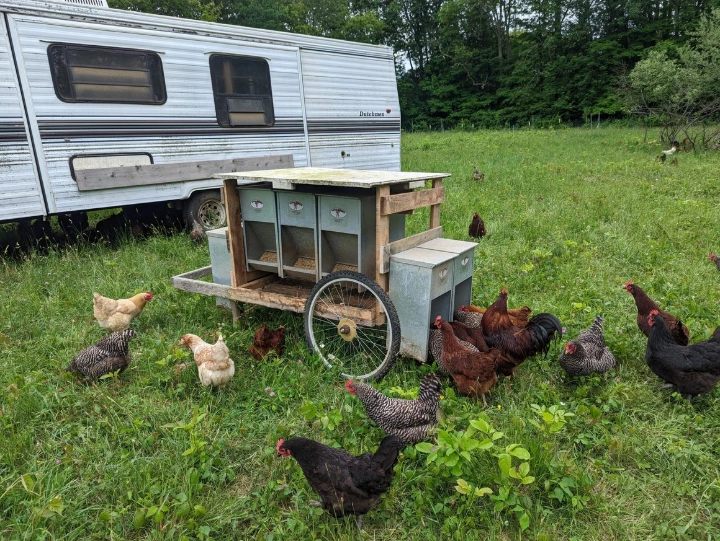
Although we like all the species of animals we raise, if we really had to sit down and rank them in order of preference, chickens would, uh, not be first. They’d be more, like, last. Laying hens are most productive during their first-ever (yearly) laying cycle and each year after that they decrease in productivity. Most production farms buy in laying hens and get rid of them 8 - 10 months later, but our standards require us to keep them for at least two full laying cycles (so about 2.5 years old). To keep our flock young-ish, we run a flock of mixed-aged birds so we can have young hens every year. Did we mention many more details are available in our health plan? See above.
As part of our yearly planning, we decide whether it makes sense to get new chicks to expand our flock for the following year, keep it the same size (although aging birds are less productive), or cull the oldest and reduce the size of the flock to eventually phase out chickens. It’s that time of year, so we’re looking into our crystal ball to estimate feed prices, demand during summer, demand during winter, how to balance demand during summer vs winter, land impacts (both good and bad with fowl birds), and farmer happiness.
So far the crystal ball is indicating “replace.” Final decision TBD but looks like we’ll be culling the oldest birds and getting day-old chicks to replace them sometime this winter. On a related note, we’ll soon be back in stock on stew hens for sale! :)
Winter is coming: summer farmers markets winding down
Because winter is coming, the end of summer farmers markets is near. Our last time at the Sturbridge, MA market is this Sunday. Tolland, and Assawaga markets both run until the weekend before Thanksgiving, so they still have a little time.
We work each year to grow our farm, so last year we expanded by adding on-farm store hours two times each week, year-round. This year, we’re thinking about adding a winter farmers market to our repertoire. We’ve applied to the Coventry winter farmers market in CT but haven’t yet heard if we’re accepted. If we are, it’ll be every-other Sunday from 10am to 12:30pm. We’ll keep you updated when we hear, but all indicators point to the Coventry market being Quite A Thing.
This winter we will also be offering once-a-month, pre-order-only pickups of meat and eggs in Sturbridge, MA. Let us know if you’d like in on this!
Did we mention winter is coming: finish all the summer projects
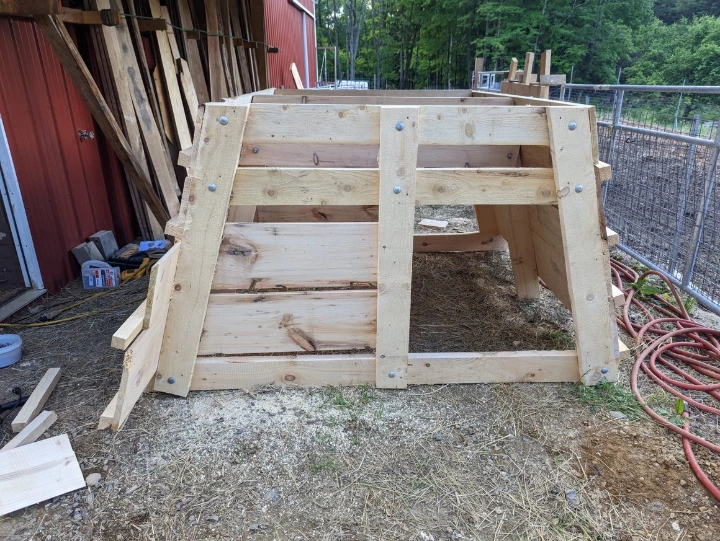
Bootstrapping a farm into existence requires a lot of infrastructure. Each part of the system, from water in far-flung paddocks to fencing to keep animals safe from predators, has to be dreamt up, planned, financed, and built. Each year we chip away at a few more of these never-ending projects to make the farm more sustainable and efficient.
We’ve made great progress already this year on water to far-flung paddocks, but we’re still working on a few things that ideally will be finished well before any snow flies. These include building six new multi-species, portable shelters and new winter paddock fencing. We’re looking forward to our reliable farm help Olly showing up in mid-October to help engineer and complete these projects!
Again, winter is coming: impacts on New Country Organics feed orders
During the colder months, our feed customers are less likely to be growing out broiler chickens or starting a new flock, so our feed orders go into a sort of ‘maintenance’ mode of mostly people with layers. This means we will be ordering feed from NCO less frequently which makes planning even more important. During peak season we order every 3-4 weeks, but in the winter it may slow to 5-6 weeks. Keep in mind that the only items that we always keep in stock are the classic layer and corn-free layer. So, let’s think ahead together!
Want to get these blogs in your inbox? Sign up for our newsletter.