
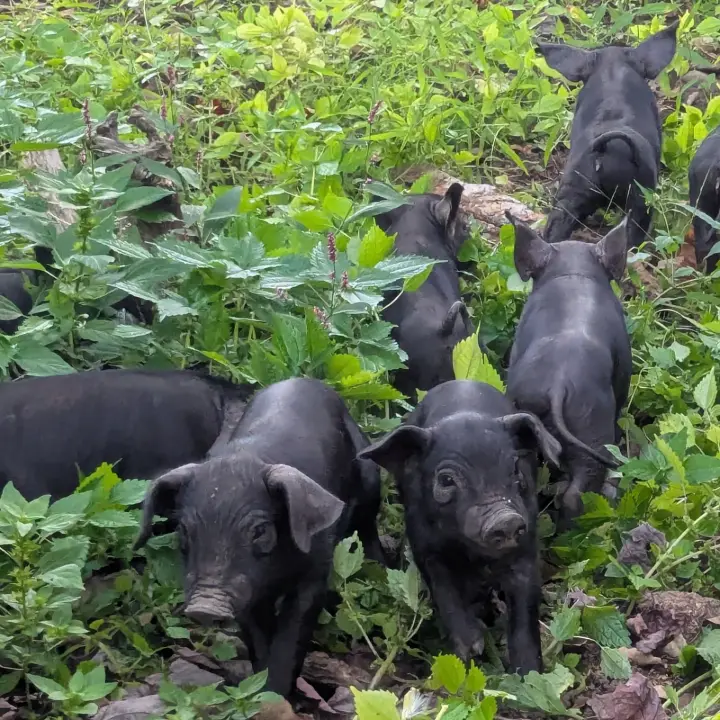
More chops on the way
Here at BOTL Farm, we love pork chops more than most people. By that we don’t mean that most people don’t like pork chops as much as us -- we literally mean that if we had to choose between pork chops and people, it’d be chops. Hands down.
Anyways, in an effort to generate a continuous stream of pork chops from our fields to your freezer, we breed our pigs year round. That means we always have pigs in various life stages from newly minted all the way through heading off to pig camp. Last week, two of our sows (pig moms) gave birth to large litters of piglets, and we're proud to report we have many new piglets running around. These piglets are crosses of Mangalitsa (which gives them a furry appearance and delicious pork fat), Large Black (which gives them long loins and docile dispositions), and a touch of Berkshire (to lean them out a bit). They always look like tiny elephants when they're first born and they appear to be about 80% snout by body weight. We're glad to report the moms and babies are all doing well and are exploring their new pasture, learning how to dig and forage, and drinking what seems to be their entire body weight in milk each day.
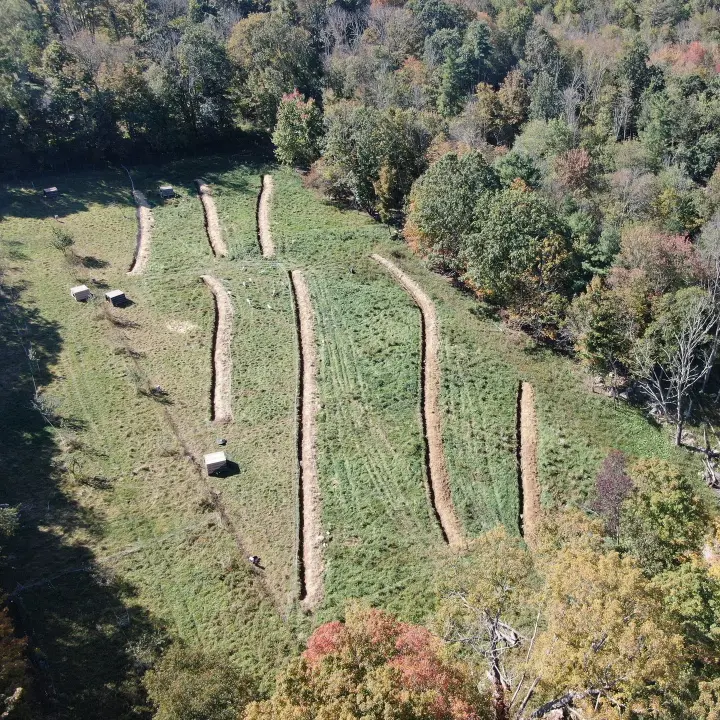
Swashbuckling swales
We have a lot of dirt (editor notes this should be soil) here on BOTL Farm and we spend a lot of time thinking about the weather. In sunny Ashford, our farm averages 50 inches of rain per year. Over the last few months, we've had very few rain days, but have had a nearly statistically average amount of rainfall. This means we get fewer rain events, but heavy storms when it does rain. Rainfall on parched soils takes longer to infiltrate and creates more runoff which leads to flooding. Flooding leads to soil erosion, goats in swimmies, and the lowest wire of the electric fence grounding out, but worst of all: it causes water to run off the pasture instead of soaking into the soil and nurturing the grass we need to feed our animals.
We've contemplated many solutions to this problem including french drains, sprinkler systems, moving to Vermont, seeding clouds with silver nitrate from small engine aircraft, rain barrel systems with very large tanks, home-made beaver dams constructed using robotic beavers, or digging some ditches. Surprisingly, we decided to go with the simple option… ditches. Not just any ditches mind you, but pirate-approved, swashbuckling swales [editor notes that swales are not actually related to pirates, but the word sounds like it should be related to pirates].
Our swales are ditches dug in fields on topographic contour lines, meaning the entire 100+ foot long ditch is the same elevation. The removed dirt [soil] is mounded on the downhill side of the ditch, and then the mound is planted with trees, converting our open pasture into silvopasture. The result is that in heavy rain events the water that doesn’t infiltrate the soil flows downhill and gets caught in the ditches. The water is held so it slowly infiltrates and waters our trees and pasture, promoting soil health and decreasing erosion. The trees will provide shade during the heat of the summer and produce fruit, lumber, and fodder for our animals. Everybody wins, especially the earthworms.
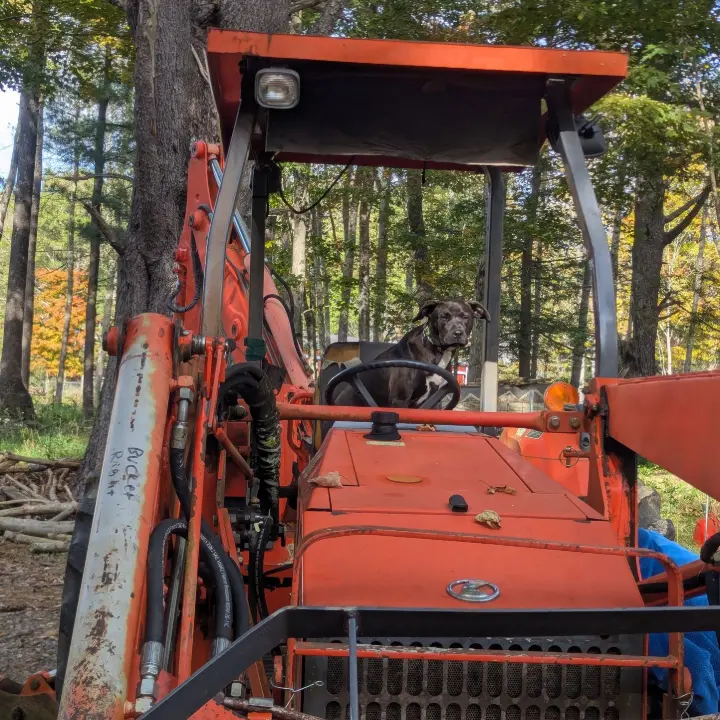
Humans vs machine
We don't have any employees, but we do have a hard working tractor. This is kind of like an employee in the sense that it costs a lot of money and sometimes you were really hoping they'd be able to work on a Monday and instead they start shooting hydraulic fluid all over the pasture. Our star employee is a Kubota L-48 from 2004. That means she turned 21 this year and our little tractor is old enough to drink! Unfortunately, she chose to drink a little too much oil this past week. A hydraulic cylinder seal that had been getting worse suddenly got a LOT worse, and we used the last few minutes of operational tractor time to pre-place animal shelters for the upcoming rain, before parking the tractor by the barn for repairs.
We are not exactly diesel mechanics, but farmers know a thing or two about swinging wrenches in the field to disassemble heavy machinery, trying to avoid hydraulic injection (don't google that), and going through grease by the case. We pulled apart the four hydraulic cylinders that move the front forks and took them to our local tractor repair shop to get them rebuilt with new seals. While the tractor was down, we took the time to catch up on all the other tractor maintenance that had been piling up including an engine oil change, hydraulic filters, transmission filters, fuel filter cleaning, air filters, greasing, and replacing two front pins that that had been turned on the lathe except the lathe was the tractor. We put everything back together, and our trusty “employee” is back on the job.
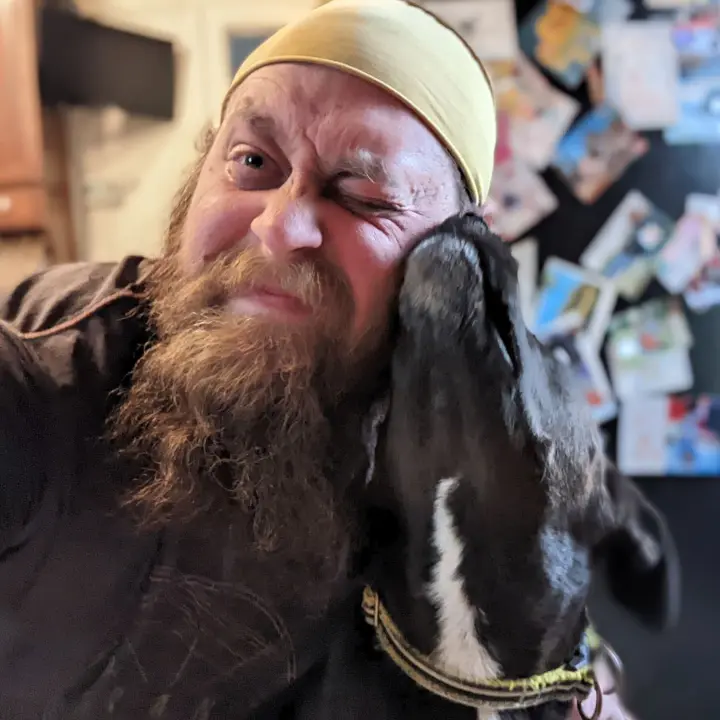
Ask a Farmer Anything (AFA)
Professors hold office hours, celebrities host ask-me-anything (AMA) events, corporate executives host "open door" meetings for their employees. As farmers, we are not celebrities, professors, or corporate executives, but hot dog – we know a thing or two about feeding rocks to chickens. We also know about the pros and cons of corn in animal feed, we've thought about how often to move goats and sheep, we've raised a variety of pigs in a variety of circumstances, and one time we had meat rabbits for like five years. We get a continuous stream of questions on these and other farming topics from our customers, other farmers, and local folks doing backyard livestock raising of all shapes and sizes. We love to give back to the community and we truly believe a rising tide lifts all ships, but it's getting to the point where answering community and customer questions is taking a significant amount of time and many keystrokes on laptop emails.
To try and address this increasing volume of questions and continue supporting the community that has helped us so much, we're starting twice a month virtual AFA (Ask a Farmer Anything) sessions. This allows for long form discussions about farming questions that folks have while benefiting everyone who shows up. It carves out dedicated time for us to share what we have learned with dirt [soil], hooves, snouts, and diesel powered machinery. Show up and ask about what kind of hay sheep should be eating, how to administer selenium to a terrified baby goat, the best way to pluck a chicken, or how to use any passenger car as a farm truck. The inaugural AFA session will be Thursday October 09 at 8 - 9am and the second one of the month on Wednesday October 22 at 1 - 2pm. Registration is required, it’s totally free but registration helps us for planning. If these times don't work, shoot us a message to let us know what works for you. We will figure this out together!
Find Us
On farm store: Every Tuesday noon - 2pm, every Saturday 1 - 3pm. Pre-order
On farm self pickup: Everyday 8am - 8pm. Pre-order only
Wooster Square, New Haven CT: This market runs every Saturday from 9am - 1pm until the end of November. We will be there every other week. Dates we’ll be there in October: October 11 and October 25. Pre-order
Assawaga Farm Market, Putnam CT: This market runs every Saturday 9am - noon until the Saturday before Thanksgiving. We will be there every other week. Dates we’ll be there in October: October 04 and October 18. Pre-order
Sturbridge Farmers Market, Sturbridge MA: This market runs every Sunday 9am - 1pm until the second Saturday of October. These are the last two Sturbridge markets for the season! Dates we’ll be there in October: October 05, October 12. Pre-order
Ask a Farmer Anything, Virtual Sessions: Thursday October 09 from 8 - 9am and Wednesday October 22 from 1 - 2pm.
It's too many dates! Save me!
Are you an electrician?
And are you licensed to work in Connecticut? We’re expanding our farming operation and we need to install a new pedestal mount electric service. We can swing a hammer, but we’re looking forward to paying a professional to do this work for us (or trade for meat!). Reply to this email if you’re qualified and interested.